
Skip to content
Civil Engineering Academy
  • About
    • About Us
    • CEA Partners
    • Join Our Newsletter
    • Contact
  • Work with CEA!
  • Practice Exams
    • FE Civil Exam
    • PE Civil Exam
    • Certified Floodplain Manager Exam
    • PE Environmental Exam
    • Exams Errata
  • Review Courses
    • Civil FE Review Course
    • Civil PE Review Courses
    • Floodplain Manager Review Course
    • CA Seismic Review Course
    • CA Survey Review Course
    • SE Review Course
  • Resources
    • The CEA Podcast
    • CEA Blog
    • CEA Quick Tip Videos
    • Approved Calculators
    • Civil FE Resources
    • Civil PE Resources
      • Construction
      • Geotechnical
      • Structural
      • Transportation
      • Water Resources
    • CA Seismic Resources
    • FE and PE Study Groups
    • PE Stamp & CEU’s
  • Practice Problems
    • Civil FE
    • Civil PE Construction
    • Civil PE Structural
    • Civil PE Transportation
    • Civil PE Geotechnical
    • Civil PE Water Resources
    • Floodplain Manager Exam
Menu

Blog

Understanding FEMA's Risk Rating 2.0: How It’s Reshaping Flood Insurance and What Certified Floodplain Managers Need to Know in 2026 | Civil Engineering Academy

Posted in Blog, Matt Fanghella

Understanding FEMA’s Risk Rating 2.0: How It’s Reshaping Flood Insurance and What Certified Floodplain Managers Need to Know in 2026

Flood insurance in the United States is undergoing its most significant transformation in decades. Since FEMA fully rolled out Risk Rating 2.0 in April 2023, premiums are now calculated using more than 30 property-specific data points—including distance to water, elevation, flood frequency, replacement cost value, and even local building characteristics. This shift moved away from older, zone-based pricing to a truly risk-reflective system, aiming for actuarial soundness and better incentives for mitigation.
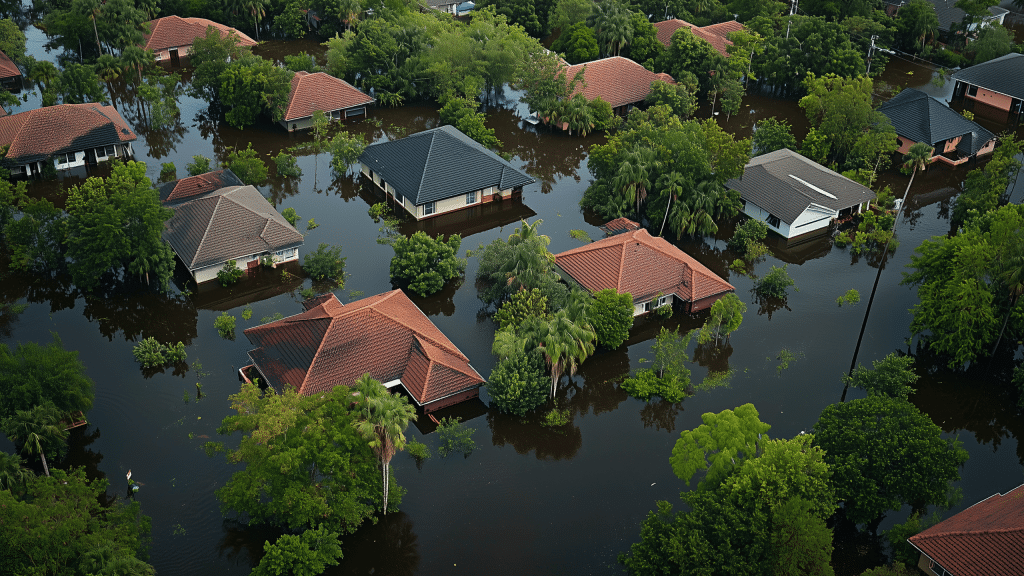


But in 2026, the conversation has intensified. Premium increases in high-risk areas have led to declining NFIP participation rates, affordability concerns in lower-income communities, and political pushback from senators in flood-prone states. At the same time, proposed FEMA flood map updates (with effective dates rolling out in various counties through summer 2026 and beyond) continue to refine boundaries, even as Risk Rating 2.0 means map changes don’t always trigger automatic premium hikes.


For Certified Floodplain Managers, engineers, planners, and local floodplain administrators, understanding Risk Rating 2.0 is no longer optional—it’s central to advising property owners, enforcing ordinances, processing permits, and helping communities build long-term resilience.


Key Impacts of Risk Rating 2.0 in 2026

  • More Accurate (and Sometimes Higher) Premiums — Properties previously in subsidized “legacy” rates are seeing increases as pricing aligns with actual risk. Studies show declines in new policies (up to 39% in some areas) and renewals (5–13%), especially where hikes are steepest.
  • Affordability Challenges — Lower-income households are disproportionately affected, widening the protection gap. Calls for targeted assistance or reforms continue, but FEMA maintains the system incentivizes risk reduction (e.g., elevating structures or floodproofing).
  • Map Updates Still Matter — While Risk Rating 2.0 decouples many premium calculations from flood zone designation, new FIRMs can still force mandatory coverage for federally backed mortgages in newly mapped Special Flood Hazard Areas (SFHAs). Proposed 2026 revisions in places like Lee County, FL, and elsewhere highlight ongoing efforts to reflect current hydrology and development.
  • Mitigation Opportunities — The biggest winners? Property owners who invest in elevation, dry floodproofing, or other measures that lower their individual risk score—and thus their premium.
  • Community-Wide Benefits — Higher standards, better enforcement, and participation in programs like the Community Rating System (CRS) can still yield discounts, even under the new pricing framework.


These changes demand that floodplain professionals stay ahead of both the technical details and the policy debates.


Prepare Confidently with Civil Engineering Academy’s Ultimate Floodplain Manager Review Course


Whether you’re pursuing initial CFM® certification, maintaining your credential, or simply deepening your expertise in today’s evolving NFIP landscape, structured preparation makes all the difference.


The Ultimate Floodplain Manager Review Course from Civil Engineering Academy remains the leading self-paced resource, built by practicing engineers and fully aligned with ASFPM’s recommended references—including coverage of NFIP fundamentals, substantial damage/improvement, flood mapping, ordinance administration, and emerging topics like Risk Rating 2.0 implications.


Led by actual practicing certified floodplain managers, the course delivers:

  • 12 comprehensive video modules with clear explanations and real-world examples
  • Downloadable slides, study guides, and FEMA map exercises
  • 120-question practice exam that mirrors the actual exam format and difficulty
  • Private student community for peer support and direct Q&A with instructors
  • Lifetime access & updates to keep pace with NFIP and ASFPM developments


Students praise its clarity and practicality:


“This course turned a mountain of FEMA docs into something manageable and exam-ready.” — Recent passer


“Perfect for busy professionals—flexible, thorough, and worth every penny.” — Local floodplain coordinator


Enroll today and gain the tools to navigate Risk Rating 2.0, advise on insurance realities, and lead stronger floodplain management in your community.


Author: Matt Fanghella, PE, CFM


🚨 DISCLAIMER 🚨
CFM® is a registered certification mark of The Association Of State Floodplain Managers, Inc. (ASFPM), which is not affiliated with and does not endorse or sponsor our course nor any other goods or services offered by CEA. Our course is based solely on publicly available materials and general industry principles. We do not use or distribute any proprietary or exam content from ASFPM. The author of our course took the exam more than four years ago and cannot (and will not), under any circumstances, answer questions related to the exam itself or its content. References to CFM® are for descriptive purposes only.


Leave a Reply Cancel reply

Your email address will not be published. Required fields are marked *

keep up with us

@theceacademy
Ready to crush your FE or PE this year? Ready to crush your FE or PE this year?
Want to build stronger relationships—at work and a Want to build stronger relationships—at work and at home?

Try the power of the 3 C’s:
✔️ Congratulate
✔️ Compliment
✔️ Console

It’s simple, but it sticks. Whether you're leading a team, working with clients, or just being a better human—these three habits go a long way.

Master this, and you'll naturally become a better coworker, leader, friend, and entrepreneur.

Relationships drive results. Start with the 3 C’s.
From the Stage to the Exam Room: What James and th From the Stage to the Exam Room: What James and the Giant Peach Taught Me About the FE and PE

Today, I got to watch my daughter shine in her school play (OK it was just a practice), James and the Giant Peach. She crushed it (yes, I'm a proud dad), and while I was there, something clicked.

Every performance like this takes weeks of rehearsal, repetition, and nerves. It's all about showing up, putting in the work, and eventually stepping out under the lights, even if you're not 100% sure how it'll go.

Kind of like preparing for the FE or PE exam, right?

You don’t pass these exams by luck. You pass them by practicing the problems, knowing your lines (aka the equations), and having the guts to show up and give it your best—even when the nerves hit.

So whether you're studying late nights or heading into your first attempt (or third!), remember this: progress takes practice—and you’re not alone in the performance.

Break a leg.

#FEExam #PEExam #DadLife
Ever thought of building buildings overseas for th Ever thought of building buildings overseas for the US Government? 🤔 That’s one route you can take as a civil engineer as well! Here’s John Pitts, P.E., PMP, on what it’s like to do exactly that!
  • ABOUT
  • COURSES
  • PRACTICE EXAMS
  • PODCAST
  • FREE RESOURCES
  • VIDEOS
  • CONTACT
Civil Engineering Academy

Stay connected with CEA and crush your exam and career goals

    Civil Engineering Academy
    • Twitter
    • linkedin
    • Insta
    • youtube
    • FB
    © 2026 CEA all rights reserved | Privacy Policy | Terms of Use | want a website like mine? check out Brandup
    Manage Consent
    To provide the best experiences, we use technologies like cookies to store and/or access device information. Consenting to these technologies will allow us to process data such as browsing behavior or unique IDs on this site. Not consenting or withdrawing consent, may adversely affect certain features and functions.
    Functional Always active
    The technical storage or access is strictly necessary for the legitimate purpose of enabling the use of a specific service explicitly requested by the subscriber or user, or for the sole purpose of carrying out the transmission of a communication over an electronic communications network.
    Preferences
    The technical storage or access is necessary for the legitimate purpose of storing preferences that are not requested by the subscriber or user.
    Statistics
    The technical storage or access that is used exclusively for statistical purposes. The technical storage or access that is used exclusively for anonymous statistical purposes. Without a subpoena, voluntary compliance on the part of your Internet Service Provider, or additional records from a third party, information stored or retrieved for this purpose alone cannot usually be used to identify you.
    Marketing
    The technical storage or access is required to create user profiles to send advertising, or to track the user on a website or across several websites for similar marketing purposes.
    • Manage options
    • Manage services
    • Manage {vendor_count} vendors
    • Read more about these purposes
    View preferences
    • {title}
    • {title}
    • {title}